To Live
Yu Hua · 1993
About this book
A former landlord's son endures every catastrophe of modern Chinese history, from civil war to the Cultural Revolution to economic reform. Yu Hua distills decades of suffering into a story of raw endurance that defines the Chinese concept of living through hardship.
Why read this for language learning
Yu Hua's "To Live" is an "intermediate" level novel, praised for its direct and accessible Chinese prose. Its straightforward language makes it highly readable for learners, while its powerful narrative exposes them to vocabulary related to daily life, historical events, and profound human emotions. The book offers invaluable cultural insights into the tumultuous 20th-century history of China, from the Civil War to the Cultural Revolution, through the eyes of an ordinary family, making it excellent for understanding historical context and developing empathy through simple yet impactful storytelling.
Vocabulary you will encounter
Start reading in Chinese
Upload any page from To Live and get sentence-by-sentence translations, grammar notes, and vocabulary building — free.
Start reading for freeMore chinese books
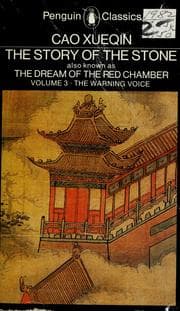
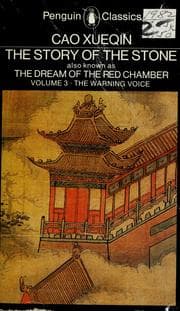
Dream of the Red Chamber
Cao Xueqin · 1791
Considered the greatest Chinese novel ever written, this epic chronicle of the decline of a noble family is a universe of Confucian ethics, Buddhist philosophy, and intricate social ritual. It remains the most studied work in Chinese literature and offers a complete portrait of late-imperial Chinese life.
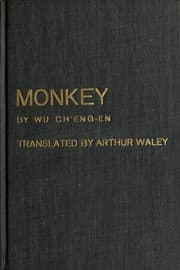
Journey to the West
Wu Cheng'en · 1592
The legendary tale of the Monkey King accompanying a Buddhist monk to retrieve sacred scriptures from India. This adventure epic is foundational to Chinese popular culture and blends Taoist, Buddhist, and Confucian thought into a rollicking narrative.
Romance of the Three Kingdoms
Luo Guanzhong · 1522
A sweeping historical novel about the power struggles following the fall of the Han dynasty. Its depictions of loyalty, strategy, and brotherhood have profoundly shaped Chinese ideas about leadership, honor, and political cunning.
Water Margin
Shi Nai'an · 1589
The story of 108 outlaws who band together on a marsh stronghold to resist a corrupt government. It has defined the Chinese archetype of the righteous rebel and reflects the deep cultural tension between loyalty to the state and justice for the people.