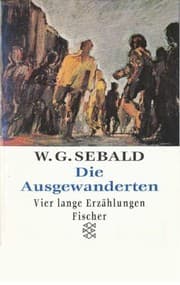
The Emigrants
W.G. Sebald · 1992
About this book
Four interconnected narratives trace the lives of Jewish emigrants displaced by the events of the twentieth century. Sebald's haunting blend of fiction, photography, and memoir explores how the trauma of exile and the Holocaust permeates even the most outwardly quiet lives.
Why read this for language learning
W.G. Sebald's "The Emigrants" is a challenging yet deeply rewarding read for advanced German learners. Its unique, melancholic prose, characterized by long, associative sentences and a blend of narrative and documentary elements, demands high-level comprehension. The book exposes readers to rich vocabulary related to history, memory, and psychological states, offering profound cultural insights into European displacement and the lingering effects of the Holocaust. It's an excellent text for mastering complex German syntax and engaging with profound historical reflection.
Vocabulary you will encounter
Start reading in German
Upload any page from The Emigrants and get sentence-by-sentence translations, grammar notes, and vocabulary building — free.
Start reading for freeMore german books
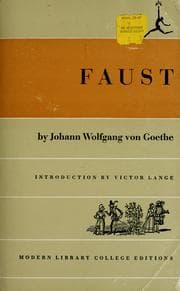
Faust
Johann Wolfgang von Goethe · 1808
A scholar sells his soul to the devil in exchange for unlimited knowledge and worldly pleasures. Goethe's dramatic poem is the foundational work of German literature, embodying the Faustian spirit of restless striving that defines German intellectual culture.

The Trial
Franz Kafka · 1925
A man is arrested and prosecuted by a mysterious authority for a crime that is never revealed to him. Kafkas nightmarish vision of impersonal bureaucracy anticipated the totalitarian horrors of the twentieth century and gave the word "Kafkaesque" to every language.
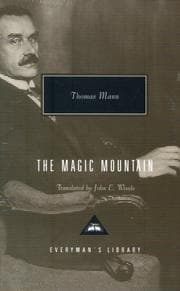
The Magic Mountain
Thomas Mann · 1924
A young man visits a tuberculosis sanatorium in the Swiss Alps and stays for seven years, debating philosophy, politics, and human nature. Mann's novel is an encyclopedic portrait of European civilization on the eve of World War I and the German love of intellectual discourse.
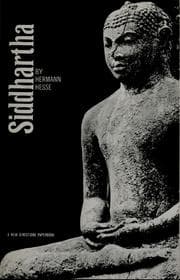
Siddhartha
Hermann Hesse · 1922
A young Brahmin in ancient India abandons his privileged life to seek spiritual enlightenment through experience. Hesse's novel reflects the German Romantic tradition of the Bildungsroman and the deep engagement with Eastern philosophy that has influenced German culture.