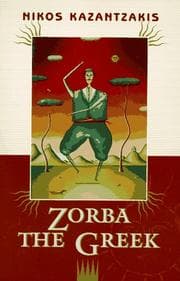
Zorba the Greek
Nikos Kazantzakis · 1946
About this book
An intellectual narrator is transformed by the irrepressible vitality of Alexis Zorba, a working-class Cretan who dances, fights, and loves without reservation. This novel defined the world's image of Greek joie de vivre and captures the tension between mind and body in Greek culture.
Why read this for language learning
"Zorba the Greek" is excellent for intermediate Greek learners, offering a vibrant narrative written in accessible Modern Greek Demotic. Kazantzakis's prose is rich and expressive, providing exposure to colloquialisms, philosophical discussions, and vivid descriptions of Cretan life. The dialogue-heavy nature helps with conversational Greek, while the cultural insights into Greek temperament, spirituality, and the embrace of life are invaluable. It's a captivating story that makes learning enjoyable and culturally enriching.
Vocabulary you will encounter
Start reading in Greek
Upload any page from Zorba the Greek and get sentence-by-sentence translations, grammar notes, and vocabulary building — free.
Start reading for freeMore greek books
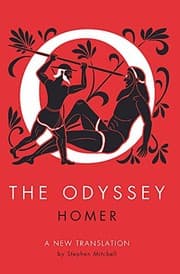
The Odyssey
Homer · -725
The foundational Western narrative follows Odysseus on his ten-year journey home from Troy, encountering monsters, gods, and the temptation to forget who he is. It established the themes of homecoming, cunning, and hospitality that remain central to Greek identity.
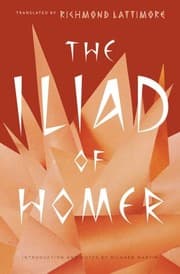
The Iliad
Homer · -750
This epic of the Trojan War explores honor, mortality, and the wrath of Achilles in verse that has defined heroic literature for nearly three millennia. It reveals the Greek obsession with glory, the tragic awareness of human limitation, and the beauty of a doomed world.
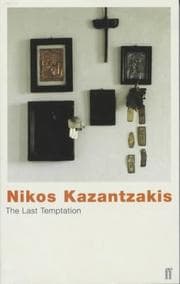
The Last Temptation of Christ
Nikos Kazantzakis · 1955
Kazantzakis reimagines Christ as fully human, tormented by doubt and desire, in a novel that outraged the Orthodox Church but revealed the agonized spirituality at the heart of Greek religious culture. It explores the struggle between flesh and spirit that echoes through Greek thought from Plato to the present.
Collected Poems
Constantine P. Cavafy · 1935
The Alexandrian poets spare, ironic verses about desire, loss, and the lessons of history created a new kind of Greek poetry that spoke to the modern condition. Poems like "Ithaka" and "Waiting for the Barbarians" have become part of the global literary vocabulary.