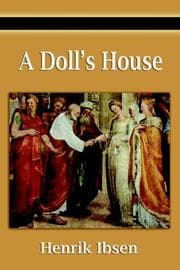
A Doll's House
Henrik Ibsen · 1879
About this book
Ibsen's groundbreaking play about a woman who walks out on her marriage to find herself sent shockwaves across Europe and is considered the starting point of modern drama. It reflects the Norwegian tradition of individual moral courage and the willingness to challenge social conventions. The play established Norway's reputation as a nation of progressive social thought and remains central to Norwegian cultural identity.
Why read this for language learning
Ibsen's precise, dramatic dialogue offers excellent exposure to formal Dano-Norwegian. Learners will encounter vocabulary related to 19th-century bourgeois life, social etiquette, and psychological states. It provides deep cultural insights into societal pressures and gender expectations of the era, crucial for understanding Norwegian cultural history. The dramatic structure makes it engaging, though the vocabulary and complex emotional landscape place it at an advanced level, perfect for mastering nuanced expression and historical context in Norwegian.
Vocabulary you will encounter
Start reading in Norwegian
Upload any page from A Doll's House and get sentence-by-sentence translations, grammar notes, and vocabulary building — free.
Start reading for freeMore norwegian books
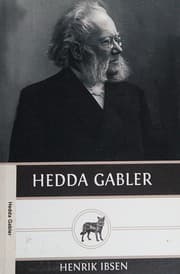
Hedda Gabler
Henrik Ibsen · 1891
Ibsen's portrait of a brilliant, frustrated woman trapped by the conventions of bourgeois society remains one of the most psychologically complex characters in world theater. The play reveals the suffocating expectations placed on women in Scandinavian society and the destructive consequences of denying individual authenticity. Hedda's rebellion against mediocrity reflects a deep Norwegian ambivalence about the costs of social conformity.
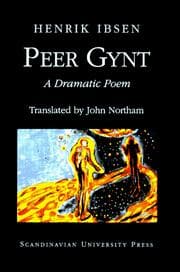
Peer Gynt
Henrik Ibsen · 1867
Ibsen's epic verse drama follows a charismatic fantasist on a picaresque journey through Norwegian folklore, African deserts, and his own delusions of grandeur. With Grieg's iconic musical score, it became a defining expression of Norwegian national identity — celebrating and satirizing Norwegian character simultaneously. The play's central question of what it means to be truly oneself remains a Norwegian cultural preoccupation.

Hunger
Knut Hamsun · 1890
Hamsun's revolutionary novel about a starving writer wandering through Kristiania (Oslo) pioneered the stream-of-consciousness technique decades before Joyce and Woolf. Its raw depiction of psychological extremity and its rejection of social realism in favor of inner experience changed the course of European literature. The novel reveals the Norwegian fascination with the isolated individual struggling against both society and the self.
Growth of the Soil
Knut Hamsun · 1917
Hamsun's Nobel Prize-winning novel about a solitary man who carves a farm out of the Norwegian wilderness celebrates the primal connection between humans and the land. It articulates a vision of self-sufficient rural life that resonates deeply with Norwegian cultural values. While Hamsun's later Nazi sympathies complicate his legacy, this novel captures something essential about the Norwegian relationship with nature and independence.