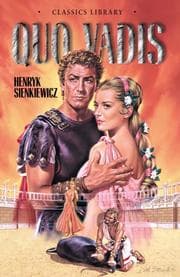
Quo Vadis
Henryk Sienkiewicz · 1896
About this book
Sienkiewicz's Nobel Prize-winning historical novel set in Nero's Rome was read by Poles as an allegory of their own persecution under foreign empires. Its message that faith and cultural identity can survive even the most brutal oppression resonated deeply with a partitioned nation. The novel remains a cornerstone of Polish national mythology and a key to understanding how Poles view their own history.
Why read this for language learning
Quo Vadis offers Polish learners an immersive dive into classical Polish prose, though its 19th-century language makes it an advanced read. It provides extensive vocabulary related to ancient Roman life, early Christianity, and court intrigue. Culturally, it showcases Sienkiewicz's epic narrative style, a cornerstone of Polish literature, and explores universal themes of faith and power dynamics. While challenging, mastering its rich, descriptive Polish will significantly enhance comprehension of historical texts and complex literary structures, offering deep insights into a pivotal historical era through a Polish lens.
Vocabulary you will encounter
Start reading in Polish
Upload any page from Quo Vadis and get sentence-by-sentence translations, grammar notes, and vocabulary building — free.
Start reading for freeMore polish books
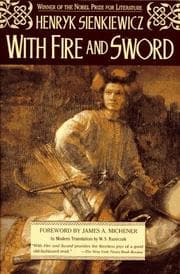
The Trilogy (With Fire and Sword)
Henryk Sienkiewicz · 1884
The first volume of Sienkiewicz's sweeping historical trilogy about seventeenth-century Poland's wars is the Polish equivalent of Gone with the Wind — a foundational national narrative read by virtually every Pole. It romanticizes the old Polish-Lithuanian Commonwealth and its warrior nobility. The trilogy shaped how Poles imagine their historical identity and continues to influence Polish popular culture.
Pan Tadeusz
Adam Mickiewicz · 1834
Mickiewiczs epic poem, written in Parisian exile, is the Polish national epic — a nostalgic portrait of Lithuanian-Polish gentry life on the eve of Napoleon's 1812 invasion. Its opening line is as well-known to Poles as "To be or not to be" is to English speakers. The poem is essential for understanding Polish Romantic nationalism and the deep emotional attachment to a lost homeland.
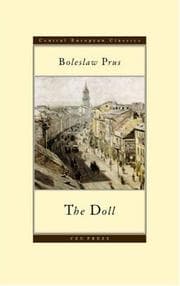
The Doll
Boleslaw Prus · 1890
Widely considered the greatest Polish realist novel, The Doll follows a self-made businessman in late nineteenth-century Warsaw as he navigates the decaying aristocracy and rising commercial class. It offers a richly detailed portrait of Polish society during the partition era, revealing the class tensions and national aspirations that would shape the modern nation. The novel remains remarkably relevant to Polish debates about tradition versus modernization.
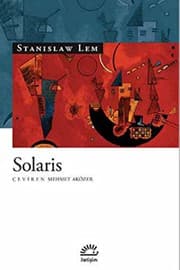
Solaris
Stanislaw Lem · 1961
Lem's masterpiece of philosophical science fiction, about scientists confronting an alien ocean intelligence that materializes their deepest traumas, transcends genre to ask profound questions about the limits of human understanding. It established Poland as an unexpected powerhouse of speculative fiction and reflects the Polish intellectual tradition of rigorous philosophical inquiry. The novel reveals a culture comfortable with ambiguity and skeptical of easy answers.