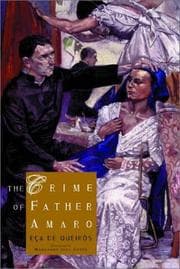
The Crime of Father Amaro
Eca de Queiros · 1875
About this book
A searing realist novel about clerical corruption and hypocrisy in a small Portuguese town. Often considered the first great Portuguese realist novel, it exposes the entanglement of the Catholic Church with Portuguese social and political life.
Why read this for language learning
Eça de Queirós's detailed and descriptive prose makes this an intermediate-to-advanced read for Portuguese learners. The language is formal yet engaging, providing extensive vocabulary related to 19th-century Portuguese society, religious institutions, and moral dilemmas. It offers rich cultural insights into the social hypocrisy and provincial life of Portugal, allowing learners to understand historical context through vivid characterizations. The clear, albeit elaborate, sentence structures are excellent for developing a strong grasp of classical Portuguese narrative style and expanding descriptive vocabulary.
Vocabulary you will encounter
Start reading in Portuguese
Upload any page from The Crime of Father Amaro and get sentence-by-sentence translations, grammar notes, and vocabulary building — free.
Start reading for freeMore portuguese books
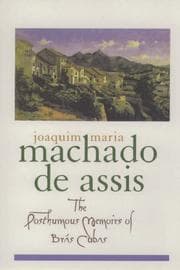
The Posthumous Memoirs of Bras Cubas
Machado de Assis · 1881
A dead narrator tells his life story with biting irony, skewering the vanity and hypocrisy of nineteenth-century Brazilian society. This groundbreaking novel reveals the class structures, racial dynamics, and social pretensions that shaped modern Brazil.
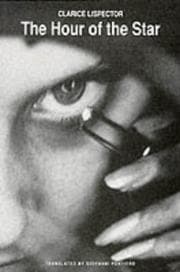
The Hour of the Star
Clarice Lispector · 1977
Lispector tells the story of Macabea, a poor young woman from northeast Brazil adrift in Rio de Janeiro, through a self-conscious male narrator. The novel lays bare the vast inequalities of Brazilian society and the existential struggles of those on its margins.

Blindness
Jose Saramago · 1995
A Nobel Prize-winning allegory in which an epidemic of blindness sweeps through an unnamed city, exposing the fragility of civilization. Saramago captures the Portuguese sensibility of endurance in the face of catastrophe and questions the moral foundations of modern society.
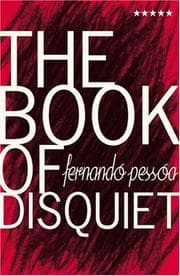
The Book of Disquiet
Fernando Pessoa · 1982
A fragmentary masterpiece attributed to Pessoa's semi-heteronym Bernardo Soares, offering meditations on solitude, dreams, and the mundane beauty of Lisbon. This work is essential for understanding saudade and the introspective nature of Portuguese identity.