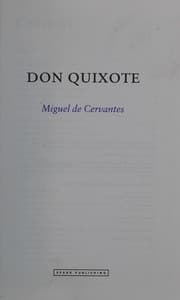
Don Quixote
Miguel de Cervantes · 1605
About this book
The founding novel of Western literature follows a deluded knight and his pragmatic squire across the plains of Spain. Cervantes created a portrait of Spanish idealism and disillusionment that remains central to Hispanic cultural identity four centuries later.
Why read this for language learning
This foundational work offers advanced Spanish learners an unparalleled opportunity to engage with Golden Age Spanish. While challenging due to its archaic language and complex sentence structures, it provides a rich vocabulary related to adventure, philosophy, and 17th-century life. Reading it offers deep cultural insights into Spanish history and literature, significantly enhancing comprehension of classical prose and the evolution of the language. It's a monumental linguistic and cultural immersion.
Vocabulary you will encounter
Start reading in Spanish
Upload any page from Don Quixote and get sentence-by-sentence translations, grammar notes, and vocabulary building — free.
Start reading for freeMore spanish books
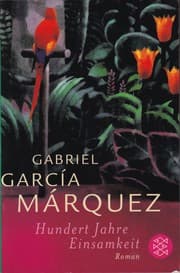
One Hundred Years of Solitude
Gabriel Garcia Marquez · 1967
The Buendia family saga in the fictional town of Macondo spans a century of Colombian and Latin American history told through magical realism. This novel defined a literary movement and captures the cyclical nature of Latin American politics, violence, and resilience.
Ficciones
Jorge Luis Borges · 1944
A collection of labyrinthine short stories that blur the boundaries between philosophy, mathematics, and fiction. Borges reshaped world literature from Buenos Aires, and these stories reveal the intellectual playfulness and cosmopolitan spirit of Argentine culture.
Twenty Love Poems and a Song of Despair
Pablo Neruda · 1924
Neruda's early poetry collection captures youthful passion and heartbreak against the landscapes of southern Chile. These poems became iconic across the Spanish-speaking world and demonstrate how deeply poetry is woven into Latin American daily life and identity.

The House of the Spirits
Isabel Allende · 1982
A multigenerational family saga set against the political upheavals of twentieth-century Chile, blending the personal with the political. Allende illuminates the role of women, class conflict, and the trauma of dictatorship in Latin American society.