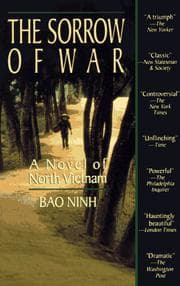
The Sorrow of War
Bảo Ninh · 1990
About this book
A North Vietnamese soldier recalls the war in fragmented, hallucinatory prose that shatters heroic narratives. This novel broke taboos by portraying the psychological devastation of Vietnamese combatants and remains the most acclaimed Vietnamese war novel.
Why read this for language learning
Bảo Ninh's masterpiece offers a raw, introspective look at the Vietnam War's aftermath, providing rich vocabulary related to conflict, psychology, and human relationships. Its non-linear narrative style challenges advanced Vietnamese learners to follow complex prose and nuanced emotional expression. Reading it offers profound cultural insights into the war's lasting impact on Vietnamese society and individual psyche, fostering a deeper understanding of modern Vietnamese identity and historical memory.
Vocabulary you will encounter
Start reading in Vietnamese
Upload any page from The Sorrow of War and get sentence-by-sentence translations, grammar notes, and vocabulary building — free.
Start reading for freeMore vietnamese books
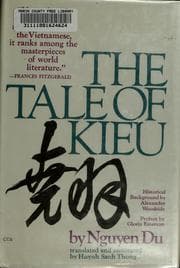
The Tale of Kieu
Nguyễn Du · 1820
Vietnam's national poem tells the story of a woman who sacrifices everything for her family, enduring betrayal and suffering with Buddhist resolve. It is the single most important work in Vietnamese literature and its verses are woven into daily speech, proverbs, and fortune-telling.
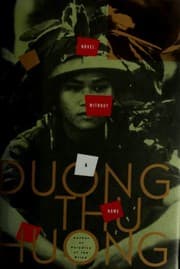
Novel Without a Name
Dương Thu Hương · 1995
A disillusioned North Vietnamese soldier questions the revolution as he witnesses its human toll. Dương Thu Hương's candid anti-war perspective led to her imprisonment and exile, making the book a testament to literary courage in Vietnam.
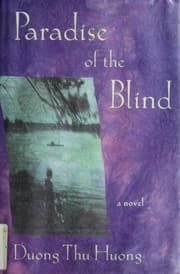
Paradise of the Blind
Dương Thu Hương · 1988
A young woman traveling to Moscow recalls her mother's suffering during Vietnam's brutal land reform campaigns. It was the first Vietnamese novel published in English and offers a rare critical look at the Communist Party's early policies and their cost to ordinary families.
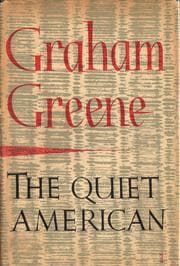
The Quiet American
Graham Greene · 1955
A British journalist and an idealistic American clash in 1950s Saigon as Vietnam's colonial war intensifies. Though written by a Westerner, it is essential reading for understanding the Vietnamese experience of foreign intervention and the arrogance of outside powers.