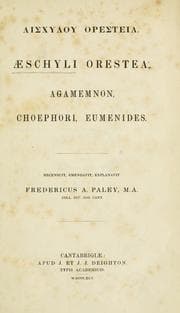
Oresteia
Aeschylus · -458
About this book
This trilogy about murder and justice in the house of Atreus established the foundations of Western drama and explored how civilized society replaces blood vengeance with the rule of law. It remains the supreme expression of Greek tragic thought about justice, fate, and democratic governance.
Why read this for language learning
Reading Aeschylus's "Oresteia" in its original Ancient Greek is an advanced undertaking, offering profound linguistic and cultural rewards. Learners will encounter the majestic, often complex language of Attic tragedy, including intricate poetic meters and archaic vocabulary. It provides unparalleled exposure to classical Greek syntax and dramatic conventions. Culturally, it's a cornerstone, exploring fundamental themes of justice, revenge, and the transition from blood feuds to civic law, offering deep insights into ancient Greek thought and societal evolution.
Vocabulary you will encounter
Start reading in Greek
Upload any page from Oresteia and get sentence-by-sentence translations, grammar notes, and vocabulary building — free.
Start reading for freeMore greek books
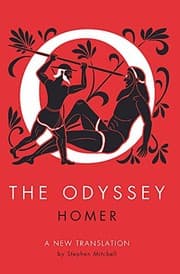
The Odyssey
Homer · -725
The foundational Western narrative follows Odysseus on his ten-year journey home from Troy, encountering monsters, gods, and the temptation to forget who he is. It established the themes of homecoming, cunning, and hospitality that remain central to Greek identity.
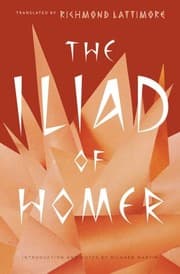
The Iliad
Homer · -750
This epic of the Trojan War explores honor, mortality, and the wrath of Achilles in verse that has defined heroic literature for nearly three millennia. It reveals the Greek obsession with glory, the tragic awareness of human limitation, and the beauty of a doomed world.
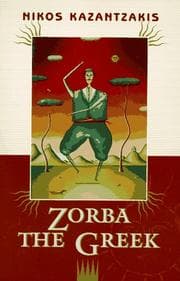
Zorba the Greek
Nikos Kazantzakis · 1946
An intellectual narrator is transformed by the irrepressible vitality of Alexis Zorba, a working-class Cretan who dances, fights, and loves without reservation. This novel defined the world's image of Greek joie de vivre and captures the tension between mind and body in Greek culture.

The Last Temptation of Christ
Nikos Kazantzakis · 1955
Kazantzakis reimagines Christ as fully human, tormented by doubt and desire, in a novel that outraged the Orthodox Church but revealed the agonized spirituality at the heart of Greek religious culture. It explores the struggle between flesh and spirit that echoes through Greek thought from Plato to the present.